

Walk into any kitchen showroom and you'll see them: three perfect ceramic bowls, a copper pot nobody has ever cooked in, and six glasses lined up like soldiers. That's the version of open shelving that gets photographed. The version I actually live with looks different — a chipped mug from a trip to Porto, a jar of rice that's half empty, and a stack of plates I reach for forty times a week.
That gap between the Instagram shelf and the working shelf is where most people get stuck. They install open shelving because it looks good, then discover it demands a relationship with their own stuff that closed cabinets never asked for. So let's talk about what open shelving ideas for kitchens and living rooms actually hold up in daily life — not just in photos.
Key Takeaways
- Open shelving works best on one wall or one zone, never everywhere at once — the visual noise compounds fast.
- In kitchens, keep shelves at least 18 inches from the cooktop or you'll be degreasing them weekly.
- Depth matters more than length: 8 to 10 inches holds plates and books without becoming a dumping ground.
- Living rooms benefit from deeper shelves (12–14 inches) because books and objects need breathing room, not cramming.
- You'll clean open shelves far more often than closed ones. That's the real cost, not the hardware.
- A mixed approach — some open, some closed — usually wins on both looks and function.
Why open shelving changes how you organize, not just how things look
Closed cabinets hide chaos. Open shelves broadcast it. That sounds like a downside until you realize what it forces you to do: keep less, and keep it deliberately.
When I converted the upper cabinets on one side of my kitchen three years ago, I assumed I'd just move the same dishes onto shelves. I ended up donating two boxes of glassware I hadn't touched in years. The constraint did the editing for me. If it didn't earn its spot in plain sight, it left.
The trade-off nobody mentions
Here's the thing: open shelving trades convenience for accountability. You gain easy access and visual lightness. You lose the ability to shove things in and forget about them. For some households that's a relief. For others it's a slow-burn annoyance that ends with baskets shoved onto every shelf to hide the mess again.
My honest read? If you're someone who keeps a tidy home naturally, open shelving rewards you. If your counters are already a disaster zone, it will just extend the disaster upward.
Where to actually start
- Pick one wall, not a whole kitchen. Live with it for a month before adding more.
- Choose a height your eye lands on naturally while standing — usually 54 to 60 inches from the floor for the bottom shelf.
- Clear everything off for a week first. Notice what you reach for without thinking. That's your shelf inventory.
Open shelving ideas for kitchens that survive real cooking
The kitchen is where open shelving gets tested hardest. Heat, steam, grease, flour dust — all of it lands on whatever you leave exposed. Design around that reality and the shelves stay usable. Ignore it and you'll be wiping them down every few days.
Position is the first decision, and it's the one most people skip. Grease travels. It doesn't stay politely near the pan. From experience, anything within about 18 inches of the cooktop collects a film within a couple of weeks. Push your open shelves past that zone, or better, put them where you actually plate and prep instead.
What actually belongs on a kitchen shelf
Everyday dishes are the obvious answer, and they're the right one. The whole appeal is grabbing a plate without opening a door. Beyond that:
- Daily mugs and glasses — the ones you use, not the set of twelve
- A few jars of dry goods in matching containers (rice, oats, coffee)
- Cutting boards leaned upright against the wall
- One or two cookbooks you actually open
- Nothing decorative that you'd have to dust around
The catch? Matching containers sound fussy until you try the alternative. A shelf with twelve mismatched boxes looks like a pantry spill. Five consistent jars look intentional. That contrast alone decides whether your shelves read as "styled" or "storage overflow."
Small kitchen with open shelves and cabinets
A small kitchen is where the mixed approach earns its keep. You don't have room to be precious about it. Use open shelves where you want lightness and quick access, and keep closed cabinets for the ugly stuff — the blender, the tupperware graveyard, the giant stockpot.
One layout that works well in tight spaces: open shelves on the wall above the sink or the prep counter, closed cabinetry everywhere else. You get the airy feeling without exposing every corner of your kitchen to view. In a small room, that single open wall can make the whole space feel twice as wide.
Open shelving in living rooms: a different job entirely
Kitchen shelves hold things you use. Living room shelves hold things you choose. That difference changes everything about how you plan them — depth, spacing, and what goes on them.
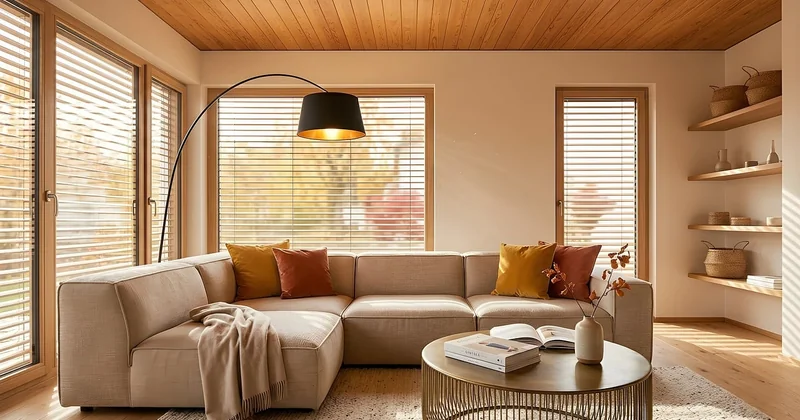
Go deeper here. A 12 to 14 inch shelf lets books sit properly and gives objects space to breathe. A shallow kitchen-style shelf in a living room looks cramped, like the furniture equivalent of a too-small shirt.
Built-in shelving vs floating shelves in a living room
Built-ins read as architecture. Floating shelves read as an add-on. Neither is automatically better — it depends on whether you want the shelves to disappear into the room or stand out as a feature. In older homes with existing alcoves, built-ins feel like they were always meant to be there. In a plain modern room, a run of floating shelves along one wall can carry the whole visual weight of the space.
Styling rules that actually hold up
- Vary the heights. A row of same-sized objects looks like a store display. Mix tall, short, and medium.
- Leave roughly a third of each shelf empty. Empty space is what makes the objects on it register.
- Stack books both vertically and horizontally — all-vertical reads as a library, all-horizontal reads as a pile.
- Add one living element: a plant, a branch, something with a shape that isn't a rectangle.
- Anchor larger pieces near the bottom, lighter ones up top, so the whole unit feels grounded.
Using shelves as room dividers
An open shelving unit placed perpendicular to a wall can split a long living space into two zones without a solid wall. This works especially well in open-plan apartments where a full partition would block light. Keep the shelves on the lower half filled and leave the upper portion sparse, so sightlines stay open above.
Open shelves vs closed cabinets: the comparison that matters
Most advice frames this as a style choice. It's really a maintenance and lifestyle choice. Here's how the two actually compare once you're living with them.
| Factor | Open shelving | Closed cabinets |
|---|---|---|
| Cleaning frequency | Every 1–2 weeks, more near cooking | Every 2–3 months |
| Dust and grease exposure | Constant | Minimal |
| Access speed | Instant, one motion | Open, reach, sometimes move things |
| Visual effect | Light, airy, requires editing | Calm, hides clutter, can feel heavy |
| Storage capacity | Lower — no stacking behind doors | Higher per linear foot |
| Best for | Daily-use items, display pieces | Bulk storage, mismatched items, appliances |
So which one actually wins?
Neither, and I'll be blunt about why. The all-open kitchen is a showroom idea that rarely survives a family of four. The all-closed kitchen can feel like a wall of doors with no personality. The people I know who are happiest with their kitchens use both — open shelves for the things they touch daily, cabinets for everything else.
One more factor worth weighing: resale. Open shelving is a personal choice. A buyer who wants closed storage may see it as work to undo. Keep the original cabinet doors if you remove them. It costs nothing to store them and saves a headache later.
Materials, height, and depth: the numbers that matter
Get these three right and the rest falls into place. Get them wrong and no amount of styling will fix it.
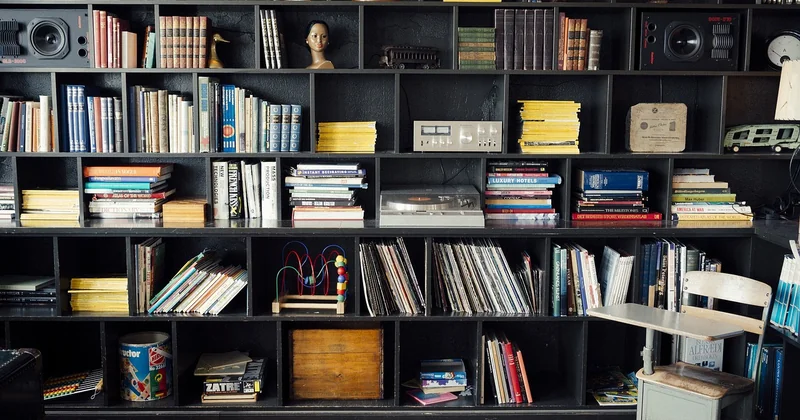
- Depth: 8–10 inches in kitchens, 12–14 inches in living rooms
- Vertical gap between shelves: 12–15 inches for dishes, 10–12 for books and smaller objects
- Bottom shelf height: 54–60 inches from the floor for easy reach
- Thickness: thicker shelves (1.5–2 inches) read as substantial; thin ones look flimsy under weight
Which material to pick
Wood brings warmth and hides dust slightly better than glass or metal. Metal is easy to wipe and suits modern kitchens, but it shows every fingerprint. Glass feels lightest visually but needs the most cleaning to stay that way. In a kitchen, sealed wood or powder-coated metal usually holds up best against grease. In a living room, you have more freedom — pick for the room's tone, not durability.
How much weight can they hold?
This depends entirely on the mounting, not the shelf itself. Floating shelves anchored into wall studs can carry substantial loads; ones fixed only into drywall will sag under a stack of plates. If you're not sure what's behind your wall, that's the one job worth paying a professional for. I learned this the annoying way — a sagging shelf full of bowls is not a small problem to fix.
The maintenance reality you need to plan for
Open shelves need cleaning roughly every week or two in a kitchen, and every few weeks in a living room. Near a cooktop, that jumps to every few days. It's not a huge task — a wipe-down takes a couple of minutes — but it's a habit you have to build. If the idea of that repetition already irritates you, closed cabinets are the honest answer.
Questions I get asked about open shelving
Are open shelves good for small kitchens?
Yes, with a caveat. They make a small kitchen feel larger because they don't block sightlines the way upper cabinets do. But they store less per linear foot, so use them for everyday items and keep bulk storage in closed cabinets. A small kitchen with open shelves on one wall and cabinets elsewhere usually looks and functions better than either extreme alone.
What should I not put on open shelves?
Anything you don't want to clean often. Greasy items near the cooktop, rarely-used appliances, and cluttered mismatched containers all drag the shelves down. Also skip anything fragile if the shelf sits where people walk close by. The shelf is a display surface and a work surface at once — treat everything on it as something you'll handle and wipe regularly.
How do I style open shelves without it looking messy?
Fewer items, more space between them. Group in odd numbers, mix heights, and leave visible gaps. Use trays or shallow baskets to corral small things into one visual block. And repeat one material or color across shelves — a single thread of consistency is what separates styled from scattered.
Where this leaves you
The best open shelving isn't the most photographed version. It's the one that holds what you reach for, sits where you actually work, and doesn't turn into a weekend chore. Start with a single wall. Keep the doors you take down. And if after a month you find yourself reaching for a cabinet instead, that's not failure — it's just the answer to a question you couldn't have answered from a photo.


