

Two houses on the same street. Same square footage, same lot size, same school district. One sells in eleven days. The other sits for four months, then drops its price by $18,000. The difference, in a lot of cases I've seen, isn't the kitchen or the paint — it's the roof line. That single silhouette against the sky does more work for your curb appeal than almost anything else you'll ever spend money on, and it's also the part of the house that decides whether you're dry in a storm.
So how do you choose the right roof style for your home without burning $30,000 on the wrong call? It comes down to four things pulling against each other: your architecture, your climate, your budget, and how long you actually plan to stay. Get those aligned and the decision almost makes itself. Ignore one and you'll feel it — either in your wallet or in a leak.
Key Takeaways
- Roof style (shape) and roof material are two separate decisions — most homeowners confuse them and pay for it.
- The 25% rule is a ventilation guideline: intake and exhaust vents should be roughly balanced so air moves, with intake often sized near 25% of total vent area depending on your setup.
- Climate drives material far more than aesthetics does. Snow, wind, and hail don't care what looks nice.
- A $30,000 roof isn't automatically overpriced — it depends on square footage, pitch, material, and labor. A steep 4,000 sq ft architectural shingle job can hit that; a simple 1,500 sq ft 3-tab roof shouldn't.
- Organic felt shingles and cheap 3-tab are the materials most contractors now steer people away from.
- The best roof is the one that matches how long you'll stay in the house — not the one your neighbor just installed.
How to choose the right roof style for your home (the short version)
Here's the thing that took me years to internalize: people walk into this decision thinking about color and shingle texture. They should be thinking about geometry first. The shape of your roof is dictated largely by the structure underneath it, and you can't just swap a gable for a hip because you like the look on a magazine cover. That's a load-bearing wall conversation, not a Pinterest conversation.
Let me give you the framework I actually use, then we'll unpack each piece.
Step one: read your architecture before you read a catalog
A Craftsman bungalow with a low-slope front porch wants a different treatment than a colonial with a steep central gable. If you put a modern standing-seam metal plane on a 1920s Tudor, you'll create a visual argument between the roof and the brick that no color choice can fix. Match the roof's language to the house's language: pitch, overhang, and material family all have to agree.
I made this mistake once on a small rental property. I put a crisp metal roof on a house that had a rounded, cottage-like profile, and the result looked like someone wearing a tuxedo to a beach party. Functional, sure. Wrong, absolutely.
Step two: separate style from material
Roof style is the shape: gable, hip, gambrel, mansard, flat, shed. Roof material is what covers it: asphalt shingles, metal, tile, slate, wood shakes. A hip roof can wear asphalt or clay. A gable can wear metal or shingle. Keep these two columns separate in your head and the whole thing gets clearer.
| Roof style | Best for | Watch out for |
|---|---|---|
| Gable | Shedding snow and rain; simple, cheaper framing | Weak points at the gable ends in high wind |
| Hip | Storm-prone and windy regions; strong all-round | More complex, more material, higher labor cost |
| Gambrel | Barn-style homes; extra attic space | Harder to ventilate; fewer installers do it well |
| Mansard | Classic French and urban designs | Drainage issues; maintenance-heavy |
| Flat / low-slope | Modern builds, rooftop use | Ponding water; needs a proper membrane, not shingles |
| Shed | Contemporary and outbuildings | One-directional runoff — plan your drainage |
Climate is the filter sitting on top of that table. If you get heavy snow, avoid anything that traps it. If you live in hail country, your shingle rating matters more than the shape. If you get coastal wind, hip roofs and proper fastening beat a pretty gable every time.
What is the 25% rule for roofing?
The 25% rule is a rule of thumb about attic ventilation. In a balanced system, you want intake vents (usually at the soffits) and exhaust vents (at the ridge or near the top) working together, and the common guidance is that intake air should make up roughly 25% of the total vent area, with the rest handling exhaust. The reasoning is simple: air won't flow out if it can't get in.

Why does this matter to your roof choice? Because some roof styles make balanced ventilation harder. A hip or mansard roof gives you fewer natural places to put ridge vents. A gambrel — that barn shape — is notoriously awkward to vent. If you pick a style that fights ventilation, you hand moisture a place to live, and moisture is what rots decking and shortens a roof's life. The 25% figure itself isn't gospel; the balance between intake and exhaust is what actually keeps your attic dry. Get that wrong and no shingle on earth will save you.
A quick ventilation checklist before you commit
- Can this roof style accommodate both intake and exhaust vents?
- Is your attic insulated at the floor, or at the roofline?
- Do you have soffits that aren't blocked by insulation?
- Will a ridge vent fit the geometry, or do you need an alternative?
If you can't answer these, that's the conversation to have with your contractor before you pick a shingle color. Color is the last decision, not the first.
What is the best roofing style for my home?
There is no single best. But there is a best for your house, and you can find it in about ten minutes by answering three questions honestly.
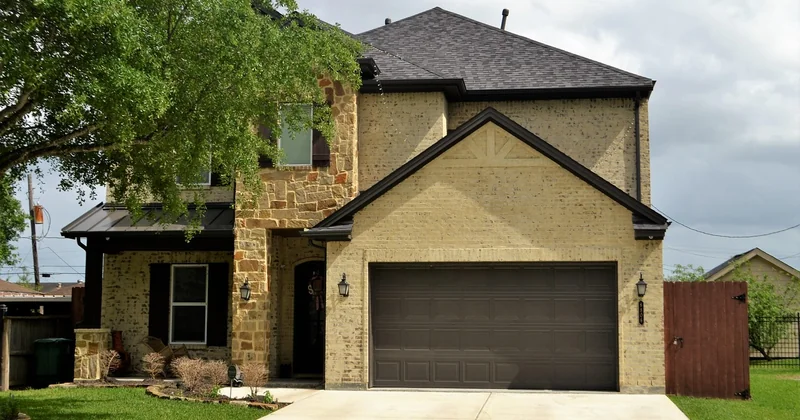
Question one: what shape is your house?
Look at your home's existing lines. If it already has a strong gable in front, working with it is cheaper and more coherent than fighting it. Changing the fundamental roof shape during a replacement is a major structural project, not a cosmetic one. Most replacements keep the same silhouette and change the covering.
Question two: what does your climate demand?
Wet, snowy regions reward steeper pitches that shed fast. Windy regions favor hip roofs and robust fastening. Hot, sunny climates push you toward reflective or lighter-colored materials that keep the attic cooler. Your roof style should be a response to weather first and a style statement second.
Question three: how long are you staying?
This one decides your budget ceiling. If you'll sell in three years, you're buying curb appeal and a clean inspection report, not a 50-year material. If this is your forever house, a premium material that lasts decades and cuts maintenance can make financial sense even at a higher upfront number.
My honest opinion: for the average homeowner planning to stay five to ten years, architectural asphalt shingles in a neutral tone are the pragmatic winner, and I'll defend that until someone shows me a better cost-per-year number. Metal and tile win on longevity, but the math only pays off over a longer horizon.
Is $30,000 too much for a roof?
Not automatically. It depends entirely on four variables: square footage, pitch, material, and labor market. A steep, cut-up roof with dormers and valleys takes far more labor than a simple rectangle, and labor is often the biggest line item. Add a premium material and a two-story house that needs staging, and $30,000 can be a fair number for a large home.

Where it becomes too much is when the scope doesn't justify it. If you're quoted $30,000 for a straightforward 1,500 square foot re-roof in architectural shingles, ask for a line-by-line breakdown. Look for the parts that don't match: an unusually high tear-off charge, decking replacement for the whole roof when only a corner is soft, ventilation upgrades you didn't ask for.
I've reviewed quotes where two contractors on the same house came in at $14,000 and $27,000. Same material, same shingle brand. The difference was overhead, scheduling, and how much margin the second one was comfortable with — not a better product. Always get three quotes, and ask each one what's excluded, because the exclusions are where the surprises live.
How to read a roof quote like a skeptic
- Square footage and pitch — the two numbers that drive almost everything.
- Tear-off and disposal — separate line, or hidden?
- Decking allowance — per sheet, or a vague "as needed"?
- Ventilation — is it in the quote, or an upsell later?
- Warranty — manufacturer and workmanship are two different warranties. Ask for both.
What roof shingles to stay away from
Organic felt shingles are the classic one to avoid — they're the older generation of asphalt products that break down faster because of their paper-based mat. Most manufacturers have moved to fiberglass mats, and that shift happened for good reason.
Beyond that, cheap 3-tab shingles are the material most installers now quietly steer people away from when the goal is longevity. They're thin, they're light, and they're the first to lose granules and curl. They're not defective — they're just built to a lower price point, and they perform like it.
Two more to be wary of: any shingle with a suspiciously low warranty from an unknown brand, and any "deal" material left over from another job that a contractor is trying to move. A warranty is only as good as the company standing behind it.
The catch? A great shingle on a badly ventilated, poorly prepped roof will still fail early. Material gets the blame, but installation and ventilation are usually the real culprits.
Putting it together
Walk outside right now and look at your house from the street, then from the corner. That outline is the first thing a buyer sees and the last thing you think about when you're inside staying dry. Style, climate, budget, and timeline — get those four in agreement and you'll choose well. And when the numbers feel murky, remember that the cheapest roof is rarely the one that saves you money, and the most expensive one isn't always the one that lasts longest.
What actually protects your house is the unglamorous stuff: balanced ventilation, honest prep work, and a contractor who explains the exclusions instead of hiding them. Pick the shape that fits your climate, the material that fits your timeline, and spend your worry on the install — not the color swatch.


