

Mixing modern and vintage furniture without making your home look like a flea market
The first time I put a mid-century teak sideboard next to a glossy white lacquer coffee table, I thought I'd nailed it. Three weeks later I moved the sideboard to the bedroom, because the living room looked like two apartments had been merged by accident. That's the thing nobody tells you about mixing modern and vintage furniture at home: the pieces are rarely the problem. The proportions are.
If you've ever scrolled through a modern vintage living room on Pinterest and then stared at your own mismatched corner wondering what went wrong, this is for you. There's a logic to it. It's less about taste than about ratios, scale, and one or two rules you can apply in an afternoon.
Key Takeaways
- Work with roughly a 70/30 split — one dominant style, one accent style. Never 50/50.
- Match era to era, not piece to piece. Mid-century pairs with Scandinavian minimalism; Art Deco fights it.
- Repeat one connector across the room: a wood tone, a metal finish, or a single colour.
- Scale mismatches kill more rooms than style clashes ever do.
- Buy vintage pieces last, not first — they should solve a gap, not create one.
Why most attempts at modern vintage interior design fail in the first month
Here's the pattern I see over and over, including in my own flat: you buy a beautiful antique armoire, you love it, and you place it in a room full of contemporary pieces. It looks like a guest who showed up to the wrong party.
The reason isn't the armoire. It's that the room has no shared vocabulary. Modern furniture tends to be low, horizontal, and matte. Vintage pieces are often taller, more vertical, and glossier — especially anything pre-1960. Put them together with no bridge and the eye reads conflict, not contrast.
The ratio rule that actually works
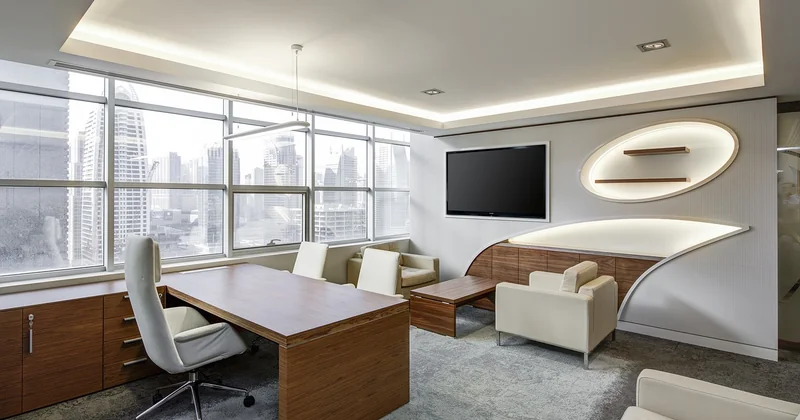
I've tested this across two apartments and a client project, and the number that keeps holding up is 70/30. Seventy percent of the visual weight goes to one style — usually the modern one, because it's easier to source consistently — and thirty percent to the vintage accent.
Count it. In a living room with eight visible pieces, that's roughly five or six modern and two or three vintage. Not four and four. Symmetry between eras is what creates that "two apartments merged" feeling I mentioned earlier.
What counts as visual weight?
- A sofa: heavy
- A large rug: heavy
- A floor lamp or a small side table: light
- A statement vintage chair: surprisingly heavy, because the eye goes straight to it
- Anything with patina or an unusual silhouette: heavy, always
Spoiler: your vintage pieces almost always weigh more visually than you expect. That's why so many people overshoot the vintage side without realising it.
Which eras actually pair well — and which ones fight
Not every vintage style plays nicely with every modern one. This is where most guides stay vague, and it's the part that saves you the most money.
| Vintage era | Pairs well with | Clashes with |
|---|---|---|
| Mid-century (1950s–60s) | Scandinavian minimalism, warm contemporary | Heavy industrial, ornate traditional |
| Art Deco (1920s–30s) | Glossy modern, brass accents, monochrome | Rustic, farmhouse, raw concrete |
| Industrial (1900s–50s) | Loft-style contemporary, black metal frames | Delicate pastels, ornate woodwork |
| Victorian | Maximalist modern, rich colour | Bare minimalism |
My rule of thumb for picking vintage pieces
If the modern half of your room is quiet — pale walls, simple lines, few objects — you can go bolder on the vintage side. An Art Deco mirror against a plain white wall is a decision. The same mirror against patterned wallpaper is a mess.
Flip it, and the reverse holds: if your modern furniture is expressive, keep the vintage restrained. One voice sings. The other supports.
How to handle the living room specifically
Living rooms are the hardest room to get right, because everything is on display at once and there's no door to hide behind.
Start with a bridge, not a centrepiece
I learned this the expensive way. I bought a vintage Persian rug for a room that had a navy sofa and a chrome-and-glass table. Gorgeous rug. Completely wrong room. I sold it four months later at a loss.
What I should have done: pick one element that belongs to neither era. A neutral textured rug. A wooden bowl. A single fabric — linen, say — used on cushions and curtains both. That bridge gives the eye permission to travel between the two styles.
Lighting does more work than furniture
A vintage brass lamp on a modern sideboard reads as intentional. The same lamp on a vintage chest of drawers reads as a themed bedroom in a hotel.
Vary the light sources. One overhead, one floor lamp, one small table lamp with an old shade. Three sources minimum in a living room. It softens everything, and softening is half the job.
Modern and antique furniture in the bedroom
Bedrooms tolerate more vintage than living rooms do, for one simple reason: you're not entertaining in there, so visual density matters less. It's the room where I'd push the vintage share to 40 percent without hesitation.
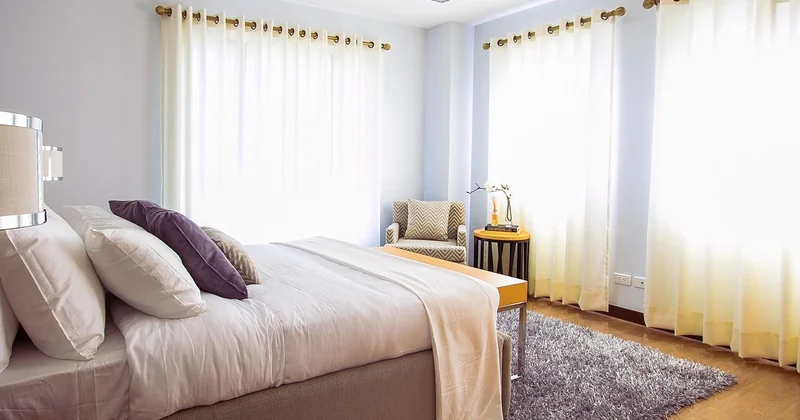
Two combinations that work reliably:
- A clean modern bed frame with a vintage wooden nightstand on one side and a modern one on the other. Asymmetry reads as deliberate here; symmetry reads as a showroom.
- Modern fitted wardrobes with a single antique chair in the corner, used for the clothes you're too lazy to hang up. Honestly, the most useful piece I own.
What doesn't work: an entire vintage bedroom set — bed, wardrobe, dressers, all matching. That's not mixing. That's a period room, and it feels like one.
The mistakes I made, and what vintage really costs
Beyond the rug disaster, I've burned money in two other ways worth mentioning.
First, I bought vintage before I knew what the room needed. That's backwards. Buy the modern base first — sofa, table, storage — then hunt vintage to fill the specific gaps. My rule now: no vintage purchase until the room is 80 percent furnished.
Second, I underestimated upkeep. A vintage wooden piece needs waxing once or twice a year. Upholstered vintage chairs often need re-foaming, and that runs roughly the price of a mid-range new chair. If you're buying at a flea market for the price of a takeaway meal, budget another two or three times that for restoration before it looks right.
On sourcing: charity shops and online marketplaces are where most of my finds came from, but the good pieces move fast. I check twice a week, consistently. Not daily — that's how you buy things you don't need.
Does this work in a small flat?
Yes, and it's arguably easier. In a small space, one vintage piece carries the whole room, so you're automatically at a healthy ratio.
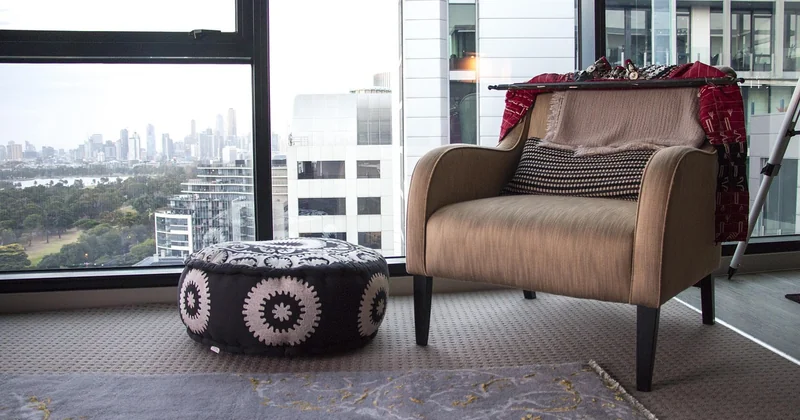
The risk is scale. A bulky antique in a small room doesn't add character, it subtracts floor. Look for vintage pieces that are tall and narrow rather than wide and deep — a slim console, a wall-mounted mirror, a single chair. Avoid anything that blocks sightlines.
And keep the modern pieces visually light: leggy sofas, glass tops, pale colours. The vintage item then reads as the one deliberate contrast, which is exactly what you want.
Where to start this weekend
Pick the room you use most. Count the visible pieces. Assign each to modern or vintage in your head, and see where the ratio actually lands — most people are surprised.
If you're over on vintage, remove one piece and live with the gap for a fortnight. If you're over on modern, don't buy anything yet. Find the bridge element first: a rug, a throw, a lamp. The vintage piece will tell you what it wants once the room has a common language.
What I've come to believe, after all the re-arranging and the one rug I still think about, is that mixing eras isn't a decorating technique at all. It's a way of admitting your home was built over time. The rooms that look best aren't the balanced ones. They're the ones where you can tell someone lived there, slowly, and got it slightly wrong a few times along the way.


