
Two years ago I moved into a 9 m² bedroom with a bed, a chair, and a cardboard box I kept telling myself I'd deal with "later." Later became eight months. And in those eight months, I slept badly. Not catastrophically — just badly. Waking at 3 a.m., lying there cataloguing things I needed to do, staring at a pile of laundry that seemed to glow in the dark.
What fixed it wasn't a new mattress. It was subtraction. Minimalist bedroom decor is the most over-photographed style on the internet and the least understood, because most people treat it as an aesthetic when it's actually a sleep intervention. Fewer things to see means fewer things for your brain to process at 2 a.m. That's the whole mechanism.
Below is what I actually did, what failed, and the thresholds I now use.
Key Takeaways
- Visible surface area, not total possessions, is what drives the feeling of mental clutter in a bedroom
- Aim for a sleep zone of roughly 18–19 °C, near-total darkness, and fewer than five visible objects from the pillow
- Storage should absorb everything except what you touch daily — one drawer beats three shelves
- Colour temperature matters more than colour: warm bulbs below 2700 K after sunset
- You can do this for under €150 if you resist buying "minimalist" objects
What are the 7 golden rules for bedroom design?
I'll be honest: I dislike numbered rules, because they imply every bedroom has the same constraints. But the seven below are the ones I keep coming back to, and each one survived testing in a genuinely small room.
The seven that actually hold up
- One function per zone. If your bed is also your desk, you will never fully switch off. I tried it for four months and moved the laptop to the kitchen.
- Dark before stylish. Blackout curtains beat any decorative choice you'll make.
- Cool, not cold. Around 18–19 °C suits most people. Warmer rooms fragment sleep.
- Nothing under the bed you don't want to think about. Under-bed storage sounds clever until it becomes a permanent backlog.
- Warm light only after sunset. Bulbs at or below 2700 K.
- Clear the path from door to bed. A visible route lowers that low-grade "I might trip" vigilance.
- Textiles: three maximum. Duvet, fitted sheet, one throw. More layers means more to fold, and folding is where chaos starts.
Which rule people break first
Number seven. Almost everyone. The throw, the second throw, the decorative cushions that get thrown on the floor every night and piled back every morning. I had five cushions at one point. I counted them one evening and genuinely couldn't explain why I owned five cushions for a bed I sleep in alone.
How can I make my bedroom more relaxing and calm?
Reduce what your eyes have to resolve. That's the short answer, and it's less mystical than it sounds — a cluttered visual field keeps a low level of alertness running in the background, the same way a messy desk does during work. You don't consciously notice it. You just notice that you're tired and can't say why.
The five-object rule I now use
Stand at the foot of your bed. Look at the bed itself and the surfaces immediately beside it. Count the objects. If you're above five, you have work to do.
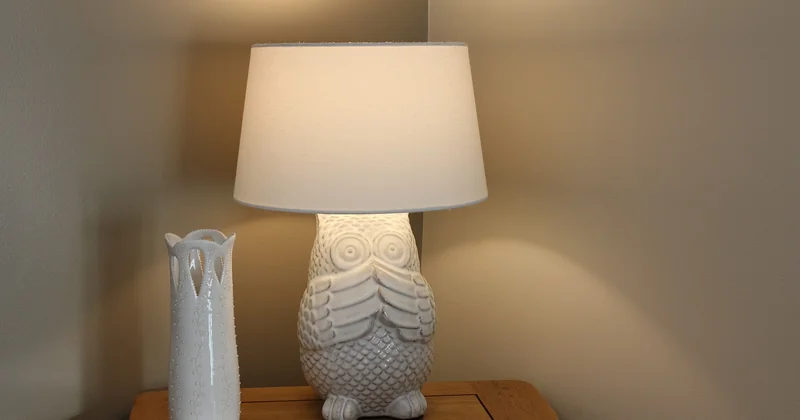
My current five: lamp, glass, book, phone on a charging pad, one small ceramic tray. Everything else lives in a drawer or in another room entirely. It took me three attempts to get under five because I kept classifying things as "not really objects."
Light, temperature, sound
These three do more for calm than any purchase you can make:
- Light: full darkness beats dim light. Blackout curtains plus a small warm lamp is the entire setup.
- Temperature: 18–19 °C. I dropped mine by two degrees and stopped waking at 3 a.m. within a week.
- Sound: steady, low-level noise is easier to sleep through than silence punctuated by traffic. A fan does the job.
The catch? These changes are invisible. Nobody walks into your bedroom and says "wow, the thermal regulation." Which is exactly why they get ignored in favour of cushions.
Quick reference: what to change first
- Night one — remove visible clutter from bedside surfaces
- Week one — blackout the window and swap bulbs to warm
- Week two — set the thermostat two degrees lower
- Month one — audit under-bed and wardrobe storage
What to put in the bedroom for better sleep?
Less than you think, and a specific kind of less. The items below are the full list I've settled on after a lot of trial and error, and I'd argue most of them are functional rather than decorative.
The keep list
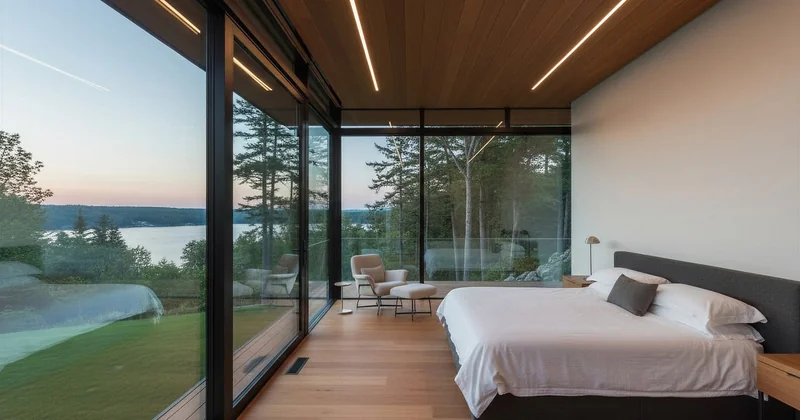
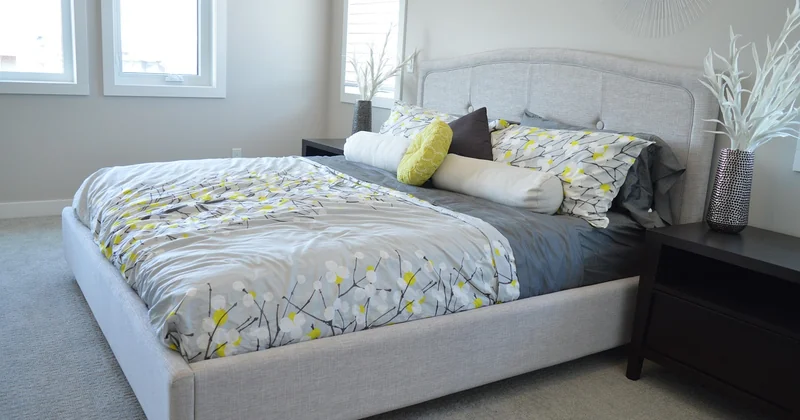
- A bed with a firm, supportive mattress
- Blackout window treatment
- Two warm-light sources: a ceiling or wall fixture for the room, and one low lamp for the last hour before sleep
- Small closed storage — a single nightstand drawer, not open shelving
- One plant, if you'll water it. Mine died twice before I admitted I wouldn't.
What to leave out
Do not put these in a bedroom: a desk, a laundry pile, visible charging cables, exercise equipment, a TV you watch from bed, and any open shelf holding more than three items. Each one is a small open loop your brain can latch onto at 3 a.m.
What to put in an empty bedroom?
Start with the bed and stop. Seriously. An empty bedroom is the easiest starting point you'll ever get, and the temptation is to fill it immediately. Resist that for at least a week. Live with your bed, one lamp, and a nightstand. You'll discover what you actually reach for versus what you assumed you'd need.
When I emptied my room to repaint, I lived with exactly those three things for nine days. I added back one item afterward. That's it.
Minimalist bedroom on a budget, and in small rooms
Minimalism has a dirty secret: it can be expensive. The well-photographed versions feature a lot of empty floor space and furniture that costs more than my first car. That's a style choice, not a sleep strategy.
Where the money actually goes
| Change | Typical cost | Impact on sleep |
|---|---|---|
| Blackout curtains or blind | €30–80 | High |
| Warm bulbs, two fittings | €15–25 | Medium |
| Closed nightstand with drawer | €40–120 | Medium |
| Under-bed storage boxes | €20–40 | Low, often negative |
| Decorative cushions | €30+ | None, or worse |
Total for the useful column: under €150. The rest of the budget you see in minimalist photography is going to furniture that looks calm but doesn't change how you sleep.
Small rooms and shared flats
My room is 9 m² and I share a flat, which means I can't control the noise outside my door. Two things helped more than anything else: a fan for constant low-level sound, and a rule that nothing lives on the floor except furniture. When you have very little space, floor clutter reads as the room shrinking around you.
If you work from home and your desk is in your bedroom, that's the hardest case. I'd push hard to move it out, even into a hallway. If you truly can't, cover it at the end of the day with a plain cloth. It sounds ridiculous. It worked better than I expected, because the visual signal of "work is finished" was there.
Common mistakes, and what I got wrong
The first version of my minimalist bedroom was a failure in an instructive way. I bought a lot of things to make the room feel minimal — matching containers, a woven basket, a second lamp I didn't need. The result was tidier and somehow less restful. I'd replaced clutter with a curated collection of clutter.
The second mistake was open shelving. It looks great in photographs taken at 10 a.m. At midnight, with three items on it, it's just stuff to look at. I replaced it with a closed drawer and never went back.
Third: I kept a stack of books beside the bed. Nine of them. I'd read one every few months. The other eight were decoration pretending to be culture.
Here's the test I now use for anything trying to enter the room: does this help me sleep, store something I actually use, or exist for a reason I can state out loud? If I can't answer in one sentence, it doesn't come in.
Isn't a minimalist bedroom just an empty bedroom?
No, and this distinction matters. An empty bedroom is a room with nothing in it. A minimalist bedroom is a room where every item in it has survived a test. The difference is intention, not quantity. A room with a great mattress, blackout curtains, and warm light isn't sparse — it's dense with things that matter.
How long does it take to feel a difference?
The temperature and light changes worked within a week for me. The clutter removal took longer, maybe three weeks, because the relief is cumulative and you don't notice it day to day. I only realised something had changed when I stopped being awake at 3 a.m. and couldn't remember when that had stopped.
Where this leaves you
You probably have a version of my cardboard box somewhere. Maybe it's under the bed, maybe it's the pile on the chair. And the honest truth is that dealing with it won't transform your life in a weekend.
But the room you sleep in is the only room you spend a third of your life unconscious in. It deserves less in it than any other room in the house. That's the whole idea, and it's the one I'd defend against every Pinterest board ever assembled: a calm bedroom is not a beautiful bedroom with the mess hidden. It's a room where there was never much to hide.


